Steel Project Handoff: Submittals, Revisions, and Release Control
Coordinate steel submittals, review comments, RFIs, revisions, partial releases, and fabrication data with a clear source baseline and documented handoff.
Quantum Steel Design video library
Long-form steel field guides and concise explainers paired with searchable transcripts, chapter links, direct references, and practical project limits.
Latest steel video
Coordinate steel submittals, review comments, RFIs, revisions, partial releases, and fabrication data with a clear source baseline and documented handoff.
Watch it your way
Open the dedicated watch page for the player, readable transcript, and supporting context, or continue to YouTube.
Open video page Watch on YouTube ↗All videos
Every watch page pairs the embedded video with visible transcript text, key points, related learning resources, and chapter links when available.
Coordinate steel submittals, review comments, RFIs, revisions, partial releases, and fabrication data with a clear source baseline and documented handoff.
Build a traceable structural steel takeoff: define scope, count members, label lengths and units, calculate nominal weight, document allowances, and compare revisions.
Learn four checks before exporting structural steel CNC data: source and revision, geometry, machine and process assumptions, and documented human release approval.
Learn why a complete structural steel model may still be unready for fabrication until connections, documents, status, exceptions, and output checks are controlled.
Compare galvanized, painted, and bare structural steel finishes and learn why finish selection affects detailing, fabrication, venting, drainage, masking, repair, and handling.
Use a pre-release beam cope check covering geometry, strength-sensitive details, clearance, access, fabrication, and approval requirements.
Coordinate base plates and anchor rods across grids, elevations, plate geometry, templates, grout, concrete, tolerances, erection, and survey information.
Learn how structural steel piece marks connect model objects, shop drawings, material, fabrication records, shipping, and erection information.
Distinguish camber, sweep, and dimensional tolerance in structural steel, and coordinate specified geometry with fabrication and erection requirements.
Compare shop welds and field welds, including how location changes access, position, weather exposure, erection sequence, inspection, and temporary conditions.
Understand standard, oversized, short-slotted, and long-slotted structural bolt holes and why type, size, orientation, joint condition, washers, and inspection matter.
Learn why a revision cloud is only a visual cue and how to compare the complete current issue, trace affected steel outputs, and control fabrication or field impacts.
Understand the difference between snug-tightened, pretensioned, and slip-critical structural bolted joints, and why the specified joint condition controls.
Learn the basic anatomy of an AWS welding symbol, including the arrow, reference line, arrow side, other side, dimensions, supplementary symbols, and tail.
Build a useful structural steel RFI with exact source references, one clear issue, requested direction, impact context, and a controlled response record.
Prepare a clearer structural steel detailing quote request with current source documents, scope, deliverables, standards, quantities, schedule, and known gaps.
Learn how structural steel shop drawings support fabrication while erection drawings organize piece placement, orientation, grids, elevations, and field work.
Follow engineering intent through coordinated steel geometry, connections, models, shop drawings, erection drawings, material lists, fabrication data, RFIs, and revisions.
Learn why blank, zero, unknown, and not-applicable are different data states—and how silent conversion can make incomplete steel information appear valid.
Learn why correct steel geometry can still be wrong when it comes from a superseded drawing, RFI, addendum, or reference model—and how to trace every affected output.
Use a three-step human check for AI-assisted steel detailing: verify sources, inspect assumptions and exceptions, compare output, and document approval.
Learn structural steel connection fundamentals: load paths, shear, moment and brace connections, high-strength bolts, welds, detailing, inspection, and constructability.
Learn how to read structural steel drawings using a seven-step workflow for document control, framing plans, elevations, sections, load paths, connections, and revisions.
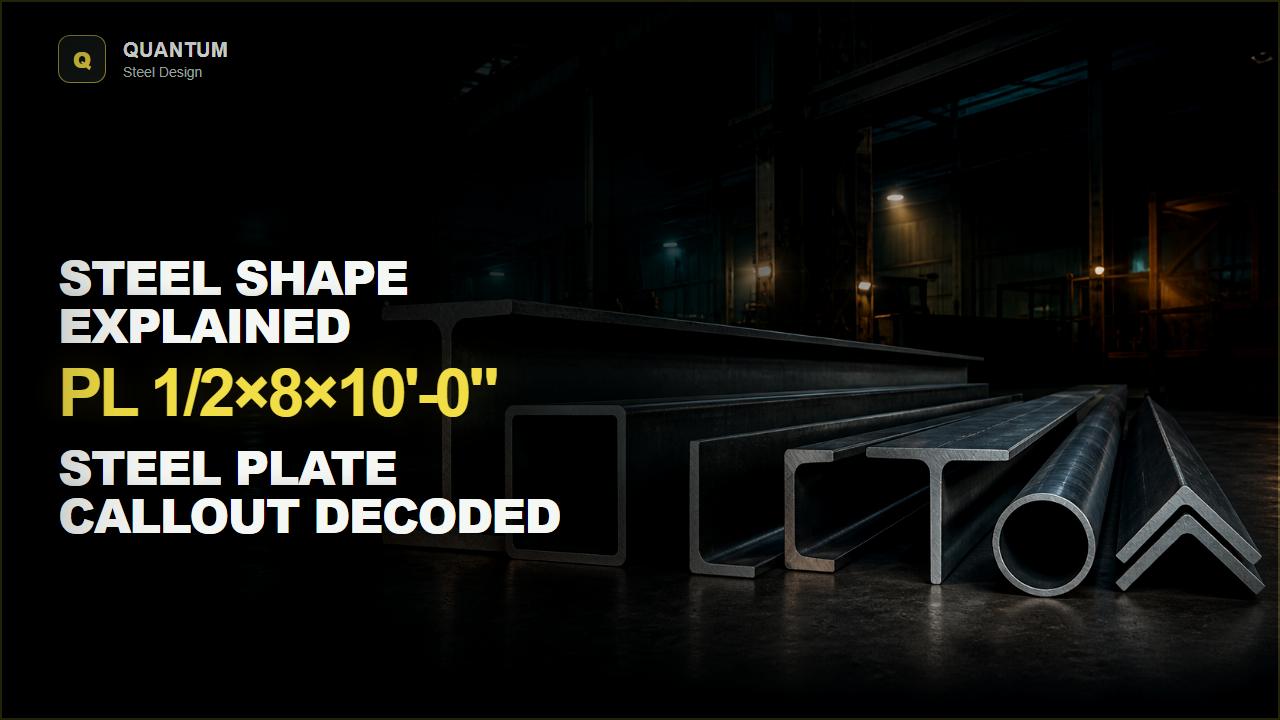
Learn how a PL 1/2 x 8 x 10'-0" callout identifies steel plate thickness, width, and length—and what the project documents must still define.
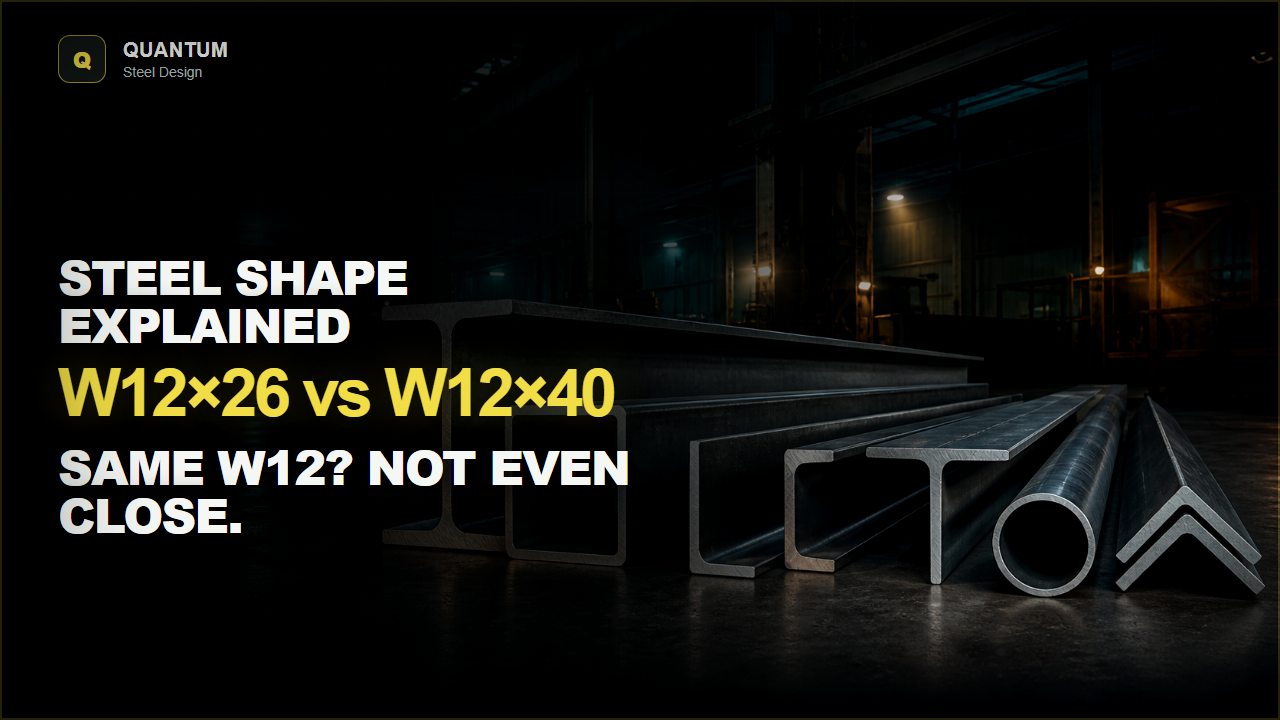
Compare W12x26 and W12x40 dimensions, weight, flange width, stiffness, and connection implications before treating two W12 beams as equivalent.
Decode the 2L4x4x3/8 double-angle designation and understand why separation, connectors, eccentricity, and stability define the built-up member.
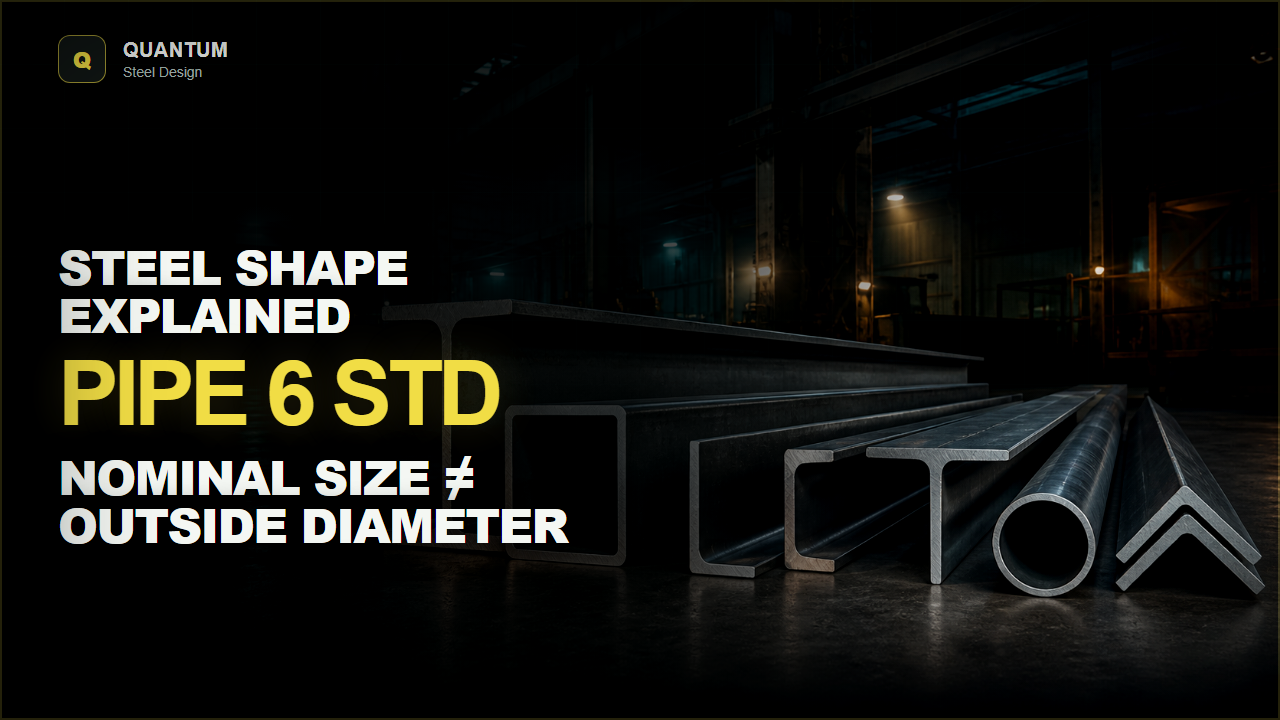
Decode Pipe 6 STD, including nominal pipe size, the actual 6.625-inch outside diameter, standard weight, Schedule 40 geometry, and wall thickness.
Learn what WT9x17.5 means, how the tee relates to a W18x35, its actual dimensions, and why stem direction and connection eccentricity matter.
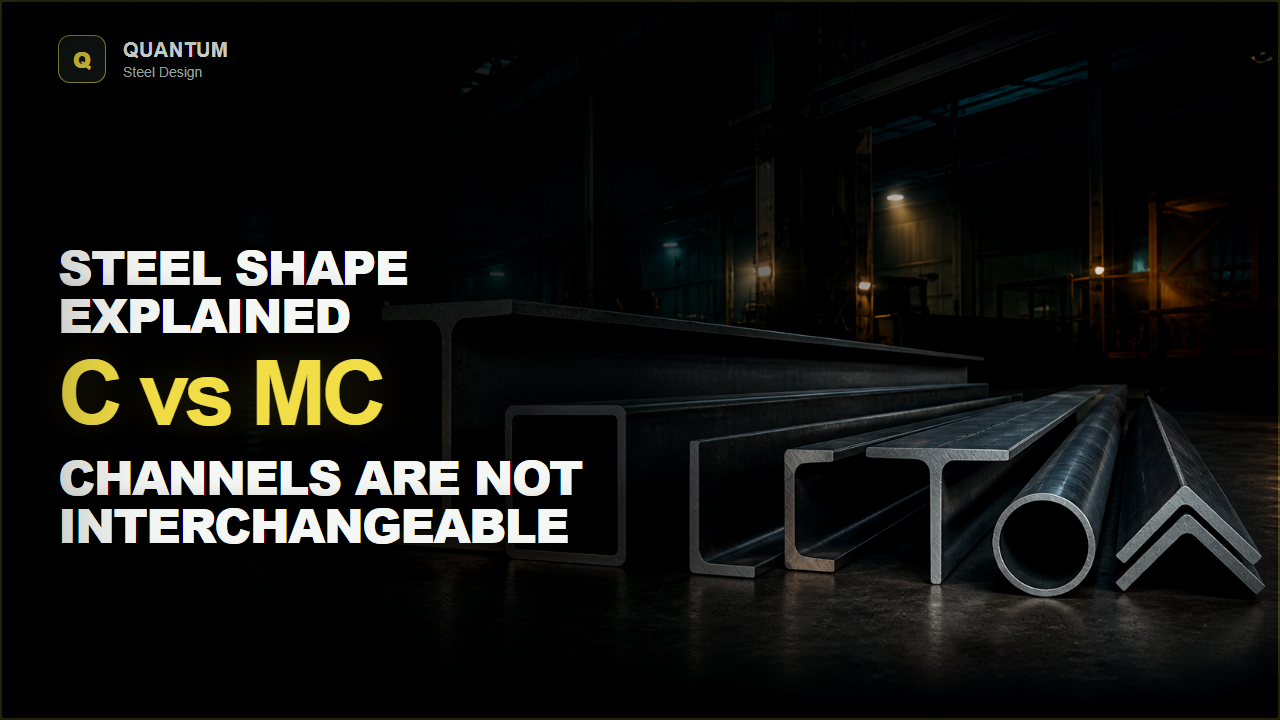
Understand the difference between American Standard C channels and miscellaneous MC channels, including geometry, connection dimensions, properties, and substitutions.
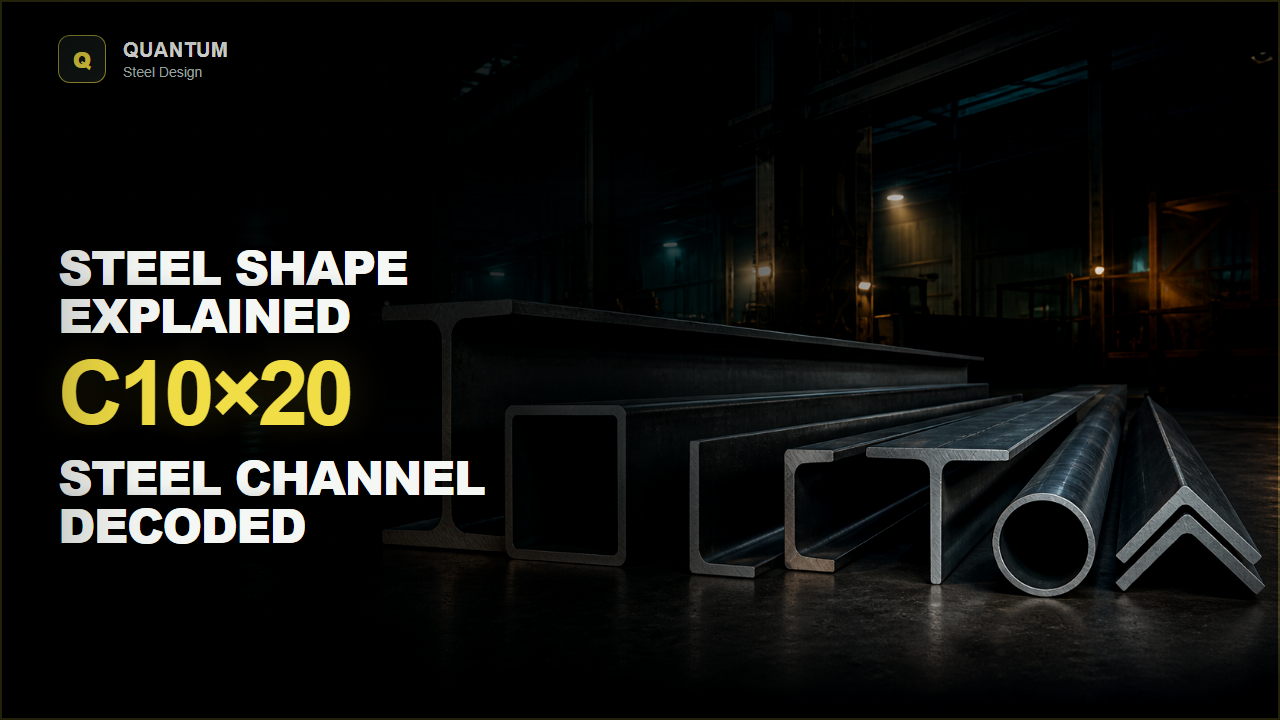
Decode the C10x20 steel-channel designation, actual dimensions, nominal weight, and the eccentricity and torsion considerations of a singly symmetric channel.
Decode the L4x4x1/4 equal-leg steel-angle designation, including leg dimensions, thickness, nominal weight, orientation, and connection considerations.
See why a nominal 0.250-inch ASTM A500 HSS wall becomes a 0.233-inch design wall and how ASTM A1085 differs under current guidance.
Decode HSS6x6x1/4 outside dimensions, nominal and design wall thickness, weight per foot, corner geometry, connection space, and fit-up considerations.
Learn what W18x35 means, including nominal depth and weight, actual AISC dimensions, twenty-foot member weight, connection fit-up, and clearances.
Continue on YouTube
New videos connect practical steel knowledge with the free tools, news, and learning resources on this site.
A few practical answers
Open an individual watch page. Its player is followed by context, a readable transcript, companion guidance, and references for further reading.
The directory uses local thumbnail images and links. Individual watch pages embed a YouTube player and connect to YouTube when opened; this is separate from the optional Analytics and Clarity choices.
No. The videos explain general concepts and fictional examples. The applicable project documents, standards, and assigned review responsibilities control actual work.